Surgical Instrument Audits: Spine of Surgical Safety and Compliance
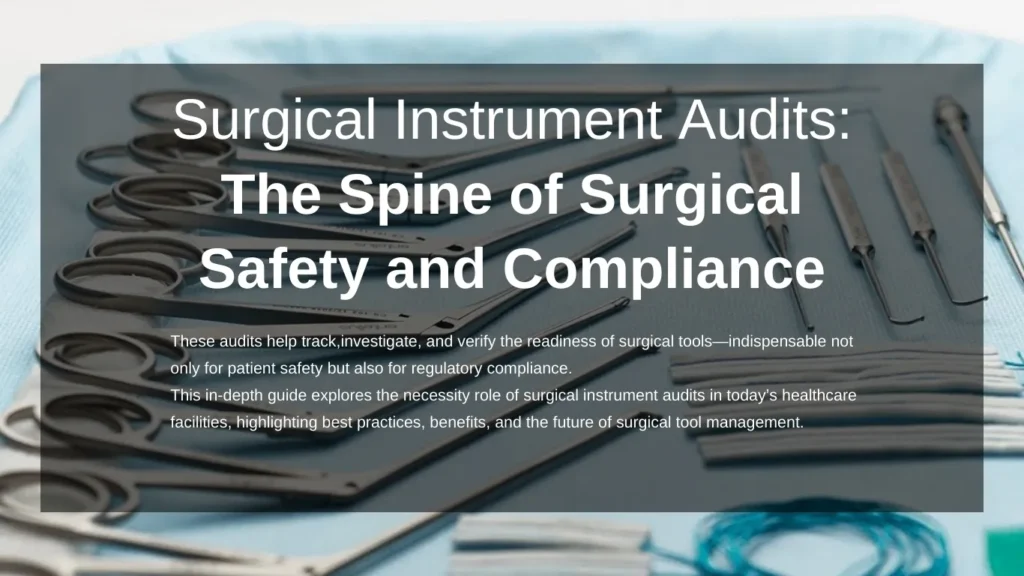
Introduction In the high-stakes environment of modern healthcare,validity is everything. From the stature of patient care to the presenting of surgical teams, every detail matters. One often overlooked still critical factor in secure operational excellence is surgical instrument audits. These audits help track,investigate, and verify the readiness of surgical tools—indispensable not only for patient safety but also for regulatory compliance. This in-depth guide explores the necessity role of surgical instrument audits in today’s healthcare facilities, highlighting best practices, benefits, and the future of surgical tool management. What Are Surgical Implement Audits? Surgical instrument audits are well ordered assessment of surgical tools used in medical procedures. These audits assess everything from the physical situation of instruments to their appearance in surgical kits, ensuring compliance with sterilization standards, inventory management, and hospital compliance protocols. Audits cover the entire lifecycle of contrivence—from procurement and usage to sterilization and storage—ensuring each tool meets the highest levelof instrument quality assurance. Why Surgical Instrument Audits Matter 1. Patient Safety First Proper auditing ensures that every scalpel, clamp, or retractor is sterile, practical and safe. This minimizes the risk of infections, surgical errors, or delays during plan of action 2. Compliance with Regulations Governments and accreditation bodies ultimayum strict adherence to hospital compliance protocols. Failing audits could lead to penalties,legal action , or even shutdowns. 3. Operational Efficiency By ensuring that implementations are where they need to be and functioning properly, audits bring down delays, support staff confidence, and refine overall workflow. 4. Financial Responsibility mislaid or damaged tools cost hospitals thousands each year. Surgical instrument audits help in medical tool tracking, minimizing waste and unnecessary repurchasing. Core Elements of a Surgical Instrument Audit To be effective, a surgical instrument audit must cover several key areas: 1. Sterile Storage Checks Instruments must be stored in controlled environments to maintain sterility. Audits evaluate sterile storage conditions and ensure that no breaches or contamination risks exist. 2. Surgical Kit Organization Audits verify that all instruments are present, accounted for, and correctly organized in surgical trays. This is vital for smooth operations and avoids mid-surgery surprises. 3. Medical Tool Tracking Systems Using barcodes or RFID systems, audits can trace the journey of each tool—ensuring accountability, timely maintenance, and proper use. 4. Instrument Quality Assurance Every item must be in good working order. Audits check for damage, corrosion, or malfunction, which could compromise surgical performance. 5. Healthcare Safety Checks Cross-checks confirm that sterilization cycles were correctly executed, ensuring no biological residue remains on the tools. Surgical Instrument Audits and Inventory Management Proper inventory management is integral to hospital efficiency and cost-effectiveness. Surgical instrument audits: Hospitals that implement digital tracking and medical tool cabinets integrated with audit logs enjoy better control and lower operating costs. Hospital Instrument Trays and Their Audit Significance Each tray is like a recipe—it needs the right tools in the right order. Audits confirm that hospital instrument trays: Even one missing or out-of-place tool can delay surgery or compromise care. Medical Tool Cabinets: Audit-Ready Storage Medical tool cabinets are essential in surgical departments, and audits inspect: This ensures everything is both available and audit-compliant. Real-World Benefits of Surgical Instrument Audits 1. Reduced Errors and Delays By checking missing or faulty tools in advance, audits stop last-minute surprises that could affect surgery timelines. 2. Improved Staff Accountability Knowing that instruments are being tracked boosts staff diligence and improves compliance with hospital policies. 3. Better Patient Outcomes Less stress and more preparation lead to fewer complications, better results, and higher patient satisfaction. 4. Budget Optimization Through smart inventory management, potentialcan reduce unnecessary secure and avoid the costs of emergency procurement or fines for non-compliance. Best Practices for Conducting Surgical Instrument Audits To get the most out of your auditing program, consider these strategies: 1. Automate Where Possible Use barcodes or RFID systems to simplify medical tool tracking and reduce human error. 2. Schedule Routine Audits Conduct regular checks—daily for high-usage tools, weekly or monthly for others. 3. Train Staff Thoroughly Ensure that everyone understands the importance of audits and knows how to carry them out properly. 4. Use Digital Audit Logs Digital systems offer better traceability, are less prone to data loss, and enable fast report generation. 5. Integrate with Procurement Systems Link audit results with your procurement platform to streamline inventory management and automatic reordering. Challenges in Surgical Instrument Auditing—and How to Solve Them 1. Human Error Even trained professionals can miss details. Automation tools and standardized checklists reduce this risk. 2. Inconsistent Procedures Different teams may conduct audits differently. A unified SOP ensures consistency and accuracy. 3. Time Constraints Surgeries are time-sensitive, and audits must be efficient. Digital tools allow faster, more thorough reviews. 4. Data Overload Too much unstructured data leads to confusion. Use intelligent dashboards to visualize key metrics and track healthcare safety checks. The Role of Technology in Modern Instrument Audits Smart Cabinets and IoT Medical tool cabinets equipped with smart sensors can report when instruments are removed, replaced, or left unused too long. AI and Predictive Analytics AI can analyze instrument usage trends to predict future stock needs or detect irregularities in surgical kit organization. Cloud-Based Inventory Platforms Integrating cloud-based systems allows real-time data sharing across departments, improving efficiency and coordination. Audits and Hospital Accreditation Surgical instrument audits aren’t just internal tools—they’re often mandated by bodies like The Joint Commission, DNV, or CMS. Regular auditing is essential for: Future Trends in Surgical Instrument Audits 1. Fully Automated Audits Using AI, robotics, and IoT, the future could see audits happen in real-time with minimal human input. 2. Blockchain Tracking Blockchain could offer tamper-proof records for each instrument’s lifecycle, enhancing trust and transparency. 3. Customizable Dashboards Role-based dashboards for acquiescenceofficers, OR managers, and sterile manufacturing teams will allow focused oversight. Conclusion Surgical instrument audits are more than just paperwork—they are fundamental tools in make certain patient safety, operational excellence, and directorial compliance. Whether it’s maintenance proper sterile storage, categorize hospital instrument trays, or ensuring instrument quality assurance, audits form the establishment of successful surgical activities.
Top Trends in Innovative Surgical Instrument Designs You Should Know

To accomplish their medical goals during procedures, doctors and surgeons use Trends in Innovative Surgical Instrument. These components are used in medical instruments to assist with tissue retention, cutting, and stitching. Medical professionals believe that each surgical instrument is made specifically for accurate surgical procedures and comes in a variety of dimensional configurations. The stainless steel components used in the tools provide for both strength and resistance against corrosive damage. Because they aid in achieving safe medical results during surgical procedures, surgical equipment are indispensable in operating rooms. Every action matters when you consider a surgeon doing life-saving emergency surgery. Through the surgeon’s hands, the surgical instruments ensure a favorable patient outcome and support perfect precision. Without surgical tools, surgery turns into a deadly speculative operation. The Development of Trends in Innovative Surgical Instrument Better patient outcomes and surgical precision are hallmarks of the healthcare industry’s advancements brought about by the evolution of nursing surgical equipment. These early devices, which would require manipulation during numerous invasive procedures, would be extremely thin, carved in wood or wattle, chiseled in bone, or peeled beneath the skin. Later changes started, involving the use of specific specializations in a small number of tools. Working with smaller, more accurate instruments that could perform a variety of operations became increasingly difficult with the introduction of minimally invasive surgery. These days, robotic or artificial intelligence (AI) surgery provides the highest level of precision and effectiveness for surgical equipment. Additionally, digital surgery has led to a remarkable and groundbreaking improvement in the precision of surgical equipment. A Historical Viewpoint From crude equipment in antiquity to extremely sophisticated ones in the present, surgical instruments have evolved significantly. Simple stone, bone, and bronze clamps and knives were employed by early medical professionals. For basic surgery, ancient societies like the Greeks, Romans, and Egyptians would only employ such instruments. Surgical instruments gradually changed when new materials, such as steel and iron, were created. In other words, surgery ushered in a new age throughout the 19th century, which saw unprecedented developments in sterilizing and precise instruments. Better patient outcomes and more effective surgeries were made possible by this early technology, which paved the way for increasingly intricate healthcare procedures and trauma surgery. Developments in Technology Surgical weaponry has advanced rapidly in the last century and subsequent generations. Minimally invasive surgery may become a reality thanks to robotic surgery and artificial intelligence in surgery. These devices enable flesh-cutters to execute precise surgical procedures with less access and fewer surgical incisions, resulting in faster recovery and smoother outcomes. Predictive analytics and machine learning techniques in healthcare that analyze large clinical data sets improve the benefits of surgery. Robotic surgery is one example of new technology that improves surgical command and physical dexterity. However, Augmented reality also helps doctors observe healthcare structures in three dimensions while performing procedures. Modern surgical techniques are significantly changing as a result of advanced surgical techniques that increase safety and efficacy. Developments Affecting Surgical Instruments in the Future However, recent technical developments have greatly improved surgical technique, and as a result, they will shape the development of surgical equipment in the future. The ability of human surgeons to do extremely intricate yet precise surgeries has significantly increased because to robotic surgery and artificial intelligence. These systems prevent human mistake, which lowers complications and improves patient outcomes. Additionally, tunnels make it possible to do less invasive, smaller procedures, which enhance patient outcomes because they require fewer incisions. Surgeons may view the anatomy in three dimensions while using an augmented reality overlay during surgery, which helps them make more accurate decisions.These advancements, being nourished by machine learning and data pooling, are opening new doors to the field of modern healthcare operations. AI in Medical Devices The incorporation of artificial intelligence (AI) into surgical devices is increasing surgical precision and efficiency. Machine learning is currently used by surgical tools to evaluate clinical data in real time and assist surgeons in making better judgments. This lowers the possibility of mistakes, particularly in intricate treatments like the minimally invasive kind. AI’s predicting capabilities can be used in healthcare through predictive analytics, enabling the surgeon to take action before problems arise. Surgery is becoming increasingly individualized thanks to this same technology, which makes it possible to create treatment regimens that are specific to each patient’s requirements for improved results. As data integration continues to advance, surgical instruments are becoming into intelligent, self-governing surgical guides. Improving Patient Care and Efficiency Although, Uniquely developed surgical instruments lead to significant advancements in medical operations. Through limited access approaches, modern surgical techniques leverage technological developments to execute surgeries more quickly and precisely. Surgeons can reach their working region through tiny incisions by employing minimally invasive surgical tools, which speeds up patient recovery. By giving the surgeon access to real-time data, the inventions enable robotic and artificial intelligence surgical procedures by enhancing the physician’s ability to make decisions during surgery. In the medical field, predictive analytics technologies assist surgeons in anticipating potential issues and successfully addressing them to enhance patient outcomes. Surgeons can administer care quickly, securely, and efficiently thanks to advanced surgical equipment. In conclusion In order to satisfy the demands of contemporary medicine, MTM surgical instruments have advanced significantly during the past several years. Artificial intelligence, robotic surgery, and minimally invasive instruments are revolutionizing the surgical art by making procedures more accurate and requiring less recuperation time, which improves patient outcomes. Additionally, these cutting-edge tools are made to help surgeons complete their task quickly, safely, and effectively. The integration of artificial intelligence (AI), machine learning, and augmented reality into surgical equipment is gradually changing the field and empowering professionals to make the best decisions to improve patient care.
How Surgical Instrument Sharpness Impacts Patient Outcomes

In conditions of patient care, Surgical Instrument Sharpness are vital, especially when it comes to security. By making sure the appropriate instruments are used appropriately and kept in top shape, medical practitioners can lessen risks and enhance successful surgical results. We’ll go over important advice, best practices, and typical blunders to escape when using Surgical Instrument Sharpness in this broad tutorial. Healthcare professionals as well as anybody else interested in the exacting standards required for patient safety and surgical accuracy will find this useful. Surgical Instrument Sharpness Significance for Patient Safety The foundation of any successful surgical method is its Surgical Instrument Sharpness. High-quality devices lessen the likelihood of impact, including infection, damage, or lengthy improvement. A tool that has been properly kept and sterilized guarantees that the surgery is carried out efficiently, minimizing patient anger and lowering the danger of post-surgical infections. These essential elements are crucial to patient safety during surgical processes: Precision: By using the right tools, surgeons can reduce tissue injury and blood loss during cuts, retractions, and stitches. Reliability: Well-maintained instruments help avoid spontaneous surgical flaws, which reserves the patient and the medical staff needless disturb. Sterility: An important component of patient safety is infection control, which is directly affected by the sterility of surgical tools. The Best Methods for Choosing and Applying Surgical Tools A difficult but crucial step in guaranteeing patient safety is selecting and utilizing the appropriate surgical equipment. Medical staff can make the best decisions by following these best practices: Recognize the Procedure Requirements: Every surgical procedure calls for a unique set of tools made for a given task. For instance, orthopedic procedures could demand larger, more robust instruments, whereas precise suturing calls for microsurgical tools. Quality Control: Use surgical tools from renowned producers to assurance longevity, precision, and reliability. Instruments made of premium stainless steel are less likely to corrode and to wear out. Test and Examine Instruments Frequently: Before and after each use, all instruments should be thoroughly considered for wear, rust, or damage. Unexpected malfunctions during processes can be eluded by testing for functional accuracy and easy handling. Correct Handling: Teaching employees how to handle instruments properly helps stop damage and expands their useful life. Although, Poor treatment might result in dull blades, deformed edges, or reduced authenticity. Properly Store Instruments: To stop infection or physical damage, surgical devices should be saved in dry, clean circumstances and in caring situation. Crucial Advice for Surgical Instrument Sharpness Maintenance For surgical tools to remain safe and useful in the operating room, regular maintenance is essential. The following maintenance instructions should be adhered to by all healthcare facilities: Cleaning After Each usage: To get rid of any biological material, instruments should be cleaned entirely after each usage. Residues can lead to illness and decay. Effective cleaning techniques include automated washers, ultrasonic cleaners, and manual cleaning. Use Approved Cleaning Agents: Only use disinfectants and cleaning solutions that have been approved for use with Surgical Instrument Sharpness. Although, Inadequate cleaning might leave residues that could endanger patients or interfere with the operation of instruments, and harsh chemicals can destroy delicate equipment. Sharpen and Polish Tools: To ensure accuracy, cutting tools such as scalpels and scissors must be regularly sharpened. The chance of tissue damage is increased by dull blades. Lubrication: To avoid rigidity, hinged devices need to be lubricated. Because ordinary oils might trap impurities, special instrument lubricants are advised. Inspection of Instrument Surfaces: Examining the instrument surfaces for corrosion, pitting, or discoloration could be a sign of improper maintenance procedures or chemical interactions. Before the next use, a regular check guarantees that any problems are fixed. Keeping abreast of technological developments However, Newer Surgical Instrument Sharpness that are safer and more effective are continually being presented as a product of ongoing breakthroughs in medical technology. To increase patient care, healthcare facilities need to stay up to date on these developments. Approach to top-notch, cutting-edge surgical instruments can be secured by collaborating with a reputable producer of medical apparatus. Conclusion It is impossible to magnify the significance of Surgical Instrument Sharpness for tolerant safety. MTM Surgical can greatly boost patient outcomes and lower the risk of difficulties by carefully choosing, handling, and holding surgical instruments. By following best practices, prevent common mistakes, and regularly educating medical staff, healthcare practitioners may uphold the greatest levels of patient safety.
Understanding the Part of Surgical Tools in Minimally Invasive

Surgical Tools in Minimally Invasive has tranasform the medical world by offering procedures with smaller incisions, quicker healing times, and fewer complications. A major contributor to the success and effectiveness of MIS is the precise and specialized surgical tools used throughout the procedure. This article dives into the essential role that surgical instruments play in minimally prying surgery and how they allow modern surgical techniques to thrive. What is Surgical Tools in Minimally Invasive Prying Surgery? Surgical Tools in Minimally Invasive prying Surgery refers to surgical techniques that limit the size and number of incisions needed through a procedure. Common MIS approaches include: These methods need specially designed tools that allow surgeons to operate with high accuracy while reducing trauma to the patient. Key Good of MIS All of these benefits are heavily dependent on the availability and effectiveness of surgical instruments designed for MIS. Core Surgical Instruments in MIS 1. Trocars These are sharp-pointed tools used to create entry ports for cameras and surgical tools during the laparoscopic method. 2. Laparoscopes These thin tubes with a camera and light source let the surgeon view internal organs in real time on a monitor. 3. Graspers and Forceps Used to hold or manipulate tissues during surgery, often featuring ergonomic designs for precision. 4. Scissors and Dissectors Specially designed to cut or separate tissues in confined spaces with minimal damage. 5. Suturing and Stapling Devices Used for closing wounds or internal tissues, often through a single port. 6. Electrosurgical Tools These tools use high-frequency electrical streams to cut tissue or stop bleeding (coagulation) during Surgical Tools in Minimally Invasive. 7. Robotic Arms and End Soul In robotic-assisted MIS, tools are attached to robotic arms that mimic the surgeon’s movements for high precision. Tools Design and Innovation The design of MIS tools is focused on enhancing visibility, maneuverability, and surgeon control. Key marks often include: As technology advances, tools are becoming smarter, incorporating AI, sensors, and real-time feedback mechanisms. Challenges in MIS Instrumentation Despite their benefits, MIS instruments present challenges: Ongoing innovation goals to overcome these hurdles and make MIS more accessible. The Future of Surgical Tools in Minimally Invasive Future trends include: These advancements promise even less prying procedures and greater outcomes for patients. Conclusion The effectiveness of Surgical Tools in Minimally Invasive prying surgery hinges on the tools that make these procedures possible. From basic trocars to advanced robotic systems, surgical tools are the backbone of MIS. As technology progresses, the role of these tools will only grow, leading to even safer, faster, and more logical surgeries. Understanding their role not only highlights the importance of change in surgical tools but also underscores how these tools form the future of medicine.
Choosing the Right Surgical Tools for precision surgical instruments

The selection of precision surgical instruments is key when performing surgery. The Right Surgical Tools can mean the difference between a difficult procedure and a successful and correct one. Healthcare facilities, operating room personnel, and surgeons must all be knowledgeable about pick the appropriate surgical tools for each case. In this detailed guide, we will discuss the main elements to consider while selecting surgical equipment to guarantee the best likely outcomes for patients. The Value of Accuracy of Right Surgical Tools The key to a successful treatment is precision surgical instruments. The surgeon’s skill to precisely wave equipment is key for both ordinary and difficult, life-saving surgeries. A surgeon can handle delicate tissues, make precise incisions, and accomplish the wanton outcomes using the appropriate surgical tools. Considerations for selecting the appropriate instrument Patient safety Patient safety is crucial when choosing the best surgical tools. The instruments are made from high-quality materials. These tools are made to be as barren as possible to reduce tissue damage. To minimize internal organ damage, non-bladed surgical instruments are employed. Procedure Type The type of surgery is influenced by the use of surgical tools. For instance, in medical procedures like laparoscopy, a trocar is key. It’s critical to comprehend the particular requirements of the surgical treatment. It aids in the selection of the best surgical tools, ensuring top performance. Instrument quality The quality of surgical equipment directly agree with its performance and longevity. Make sure the tools are from producers who adhere to industry production requirements. During surgery, high-quality instruments are less likely to malfunction, making the procedure leery and more seamless. Upkeep and Sanitization Sterilization or upkeep of surgical instruments must also be taken into account. Avoid sterilizing disposable devices, even though they can end up costing more in the long run. To maintain their safety and efficacy over time, reusable articles should be simple to clean and sterilize. Carnegie Surgical Tools: Why Choose Them? Carnegie Surgical tools is the greatest choice if you’re searching for the best surgical instruments that satisfy and surpass every requirement tuck in this guide. We have established a solid reputation for quality in the production of surgical tools. Here’s why you ought to pick us: Unbeatan Quality: The best materials are used to make our tools, guaranteeing their longevity and accuracy throughout every task. Broad Specialization: To meet your unique demands, we provide a large selection of surgical tools sets made for different surgical specialties. Innovation and Human factors: We study the comfort and accuracy of surgeons when designing our tools. To improve your surgical experience, we place a high priority on human factor and lightweight designs. Adapt Solutions: We recognize that there is no one-size-fits-all solution. We offer specialized instrument solutions to meet your particular needs. Compliance and Reliability: To protect your safety and peace of mind, we follow the most stringent industry norms and quality control requirements. By selecting Carnegie Surgical Instruments, you are selecting a partner committed to both your success and your patient’s welfare. Get in touch with us right now to find out how our tools can revolutionize your surgical practice. In conclusion Selecting the appropriate surgical tools is a crucial choice that affects both the effectiveness of surgical procedures and patient outcomes. Your choice should be influenced by several important aspects, including accuracy, specialty, quality, ergonomics, and compliance. You can make sure that your patients receive the best care possible by collaborating with reliable manufacturers like MTM Surgical. Surgeons can perform procedures with assurance because they have the appropriate instruments for the job. The appropriate tools are the unsung heroes that enable the extraordinary in the field of surgery.
The Importance of Surgical Instruments Materials Selection

Today’s high-quality Surgical Instruments Materials Selection use a variety of metals and materials to guarantee optimal performance. In actuality, there are now so many resources available to give you cutting-edge equipment that it might be difficult to decide which to employ. Here’s a brief overview of how some of these can help you: Surgical Instruments Materials Selection Surgical-grade stainless steel For many years, stainless steel surgical tools has been the preferred metal for surgical equipment because of its strength, resistance to corrosion, and ease of cleaning, which makes it perfect for settings where hygienic conditions are crucial. An alloy of iron, carbon, silicon, manganese, and chromium makes up all stainless steel. The steel’s surface is protected from corrosion by a thin coating of oxide that is produced by the chromium. At least 13% of medical grade steel is composed of chromium. Other chemical elements that give each instrument its distinct qualities, like nickel and molybdenum, may also be present. For instance, nickel is frequently added to lessen brittleness, whereas molybdenum might be added to improve corrosion resistance. However, because nickel might activate a patient’s immune system or produce an allergic reaction, it is sometimes omitted from stainless steel surgical equipment. Ceramic In order to extend their working life, certain surgical tool manufacturers also supply ceramic-coated stainless steel varieties. This is because ceramic coating resists rust and corrosion better than stainless steel and has a surface hardness that is four to five times higher. Additionally, it minimizes abrasion by providing a greater sliding capability than stainless steel surgical tools. Furthermore, a black ceramic coating helps reduce reflections on the instrument’s surface, which is useful for some procedures. Tungsten carbide Compared to stainless steel, tungsten carbide Surgical Instruments Materials are stronger and have a five-fold longer lifespan. Any surgical tool with tungsten carbide at the tip, such forceps, will be able to provide a stronger grip in addition to having blades that remain sharper for longer. The metal titanium Because titanium Surgical Instruments Materials are 100% anti-magnetic, they are the best surgical instruments option for surgeons who use magnetic resonance imaging, or MRI. Titanium is ideal for surgeons who want to perform intricate. Precise procedures without becoming tired because it is also quite light. Furthermore, titanium is totally resistant to industrial and organic chemicals, non-corrosive, and fracture-proof, enabling increased longevity and durability. PEEK The US aerospace industry was the first to produce polyetheretherketone, or PEEK, in the late 1970s. For some instruments, including retractors and valves designed for cervical access to the spinal column. It can offer obvious benefits because it is radiolucent (visible to x-rays), 3D navigable, and does not create any image artifacts. PEEK’s biocompatible qualities lower the danger of allergic reactions in high-risk patients, and its lightweight nature allows it to be used to make tools that are easier to handle. Nitinol When you need an instrument with shape memory, high elasticity, high biocompatibility, and MRI compatibility, nitinol-based instruments are highly helpful. This is due to the fact that nitinol, a metal alloy made of nickel and titanium, has remarkable flexibility under pressure. Nitinol tools with original shape memory include clip-applying forceps, vascular dilators, suction cannulas, and spatulas. Light pressure can be used to bend these into the desired shape. Then, when subjected to higher temperatures, like during autoclaving, they will regain their previous shape. Fat retractors and other instruments with super-elastic characteristics likewise adjust to the outside pressure. The MTM Surgical instruments, however, revert to their initial state as soon as this pressure is released.
The top surgical tools names in 2025

During a surgical procedure, a variety of surgery instruments are obtainable, each with unique applications and benefits (and drawbacks). Each specialty will have its special kit, and as a surgeon, it is key to understand surgical tools names and when to use them. This post examines the key equipment available in a general set for open abdominal surgery. The Worth of Understanding Surgical Tools For surgical technicians, having a solid understanding of surgical tools is essential. It guarantees patient safety and the best possible results in addition to growing operating room efficiency. By becoming skilled with these tools, surgical technologists can anticipate doctors’ needs, cutting down on method times and enhancing the surgical experience in general. Various surgical tools names How many surgical tools are there, then? In the operating room, hundreds of distinct surgical tools are employed for very specific purposes. These are the categories for general surgical instruments, along with their names and applications. To distinguish surgical instruments based on their intended use, use these five categories. Cutting Instruments Cutting instruments include things like saws, knives, knives, blades, scissors, and cautery appliances. Incisions are made and muscle, tendon, cartilage, bone, arteries, and other connective tissues are cut off with cutting tools. Scalpels are categorized according to size, whereas scissors can be heavy-duty to cut through bone and hard tissue or small and bend to make microscopic cuts in neurosurgery procedures without causing damage to the near tissue. Grasping Tools Clamps, tweezers, and forceps are examples of common grasping instruments. To hold objects, one uses grasping tools. Organic tissue, including skin, bone, and organ tissue, can be grasped with grasping tools in order to manipulate, hold, or expose and access areas underneath. Needles, sponges, and surgical cloths are examples of inorganic materials that can be held in these instruments. One of the most popular kinds of gripping instruments is the forceps. They usually fall into one of many categories: thumb forceps, which are used to tie sutures and apply and remove dressings by squeezing them open. For some applications, reverse forceps provide uniform tension and increased precision because they are squeezed to close rather than open. Step-locking mechanisms on ratcheted forceps are intended to keep them closed at different times. This trait is absent from non-ratcheted forceps, which require constant holding pressure. Instruments for Hemostatics Sawtell and Dunhills forceps are examples of hemostatic tools used to manage and stop bleeding. In order to cauterize, stop bleeding, and seal wounds, electrical cautery equipment is also utilized. Another technique for reaching hemostasis is sutures, which are often applied with a needle and holder. Retractions Retractors can be used to pull tissue or organs back to reveal areas lower, or they can be used to hold a cut or cut open for more workspace visibility. In general, retractors can be classified as either self-retaining or non-self-retaining. Self-retaining removals are apt to maintain their location at different internals. The stand must keep the latter open at all times. Tools for Tissue Unification Tissue unification tools and instruments include surgical tape, staplers, cauterizers, clips, sutures, needles, and needle holders. Tissues like skin, bone, cartilage, muscle, tendon, and other membranes can be joined together using these. Although this article focuses on surgical tools for human use, there are many parallels between the functions of typical veterinary surgical instruments and those of human-based surgical devices. General surgical tools names Bipolars In electrosurgery, bipolar devices are utilized because they enable precise coagulation and cutting with little heat injury to adjacent tissues. Bipolar tools employ two electrodes to transfer electrical current directly through the tissue between them, in contrast to monopolar tools that need a grounding pad. Because of their versatility, bipolars can be used in a variety of surgical procedures, such as neurosurgery, gynecological treatments, scantly invasive surgeries, and more. Bone Instruments Bone tools are specialized tools used in the surgical system to manipulate, cut, and repair bones. For many orthopedic procedures, such as joint renewal, fracture repairs, and back surgeries, bone instruments are necessary. Each is created from the ground up to satisfy sure surgical needs and superior craftsmanship. Clamps STERIS provides a wide range of V. Mueller clamps, such as Cosgrove, Bulldog, DeBakey, and Cooley, among many others. In order to safely hold tissues, blood vessels, or other structures in place throughout a variety of procedures, surgical clamps are necessary equipment. essential for maintaining tissue manipulation and homeostasis, assisting surgeons in carrying out operations with control and precision, and guaranteeing a clear surgical field In several surgical operations, specialized hemostatic tools are utilized to block blood arteries or tissues. Curettes Numerous curettes, such as Bruns, Epstein, Freimuth, and others, are employed in gynecological, dental, and orthopedic surgeries. Curettes are multipurpose surgical tools used in a variety of medical procedures to scrape or debride tissue. Their spoon- or scoop-shaped tip makes it possible to remove undesirable or diseased tissue precisely without causing damage to other areas. Useful, adaptable tools for rake, removing, or gathering tissue and detritus from bodily cavities or surfaces for testing or biopsies in a change of disciplines Disposables Various types of disposables include scalpels and blades for exact incisions, forceps for venal and holding tissues, and scissors to cut tissues and other materials Used alongside surgical equipment to promote sterility, efficiency, and patient safety Disposable items assist reduce the risk of infection, guarantee that instruments are always sharp and ready for use, and increase overall surgical efficiency Depressors, Elevators, and Dissectors During surgery, dissectors are used to differentiate and work with tissues. Elevators are frequently use in orthopedic, ENT, and dental procedures to raise and separate tissues, bones, or other form. During surgical procedures, depressors move or hold down tissues to better visibility and access. Picks and Knives Picks and knives for a variety of operations and jobs, such as tissue manipulation and accurate cutting. Every knife and pick is painstakingly made from start to finish to satisfy particular surgical requirements and maintain the highest standards of quality. Scoop out, Osteotomes,
Surgical and dental instruments in 2025

As an extension of the surgeon’s fingers, the Surgical and dental instruments used in surgery are quite diverse and specifically made to carry out a variety of dental surgical procedures. Use all of your skills in this area. While many devices originate from general surgery or its subspecialties and dentistry itself, some are specific to oral surgery. Simple surgical instruments are ones that the surgeon uses with his own hands; in other words, they don’t require a lot of technological sophistication. This article will discuss these types of devices. Surgical and dental instruments This article will walk you through the various types of Surgical and dental instruments and provide you with the best options available if you want to learn more about them or just review everything so you can always choose the best one for each situation. Don’t miss any details; keep reading. Typically, basic instruments consist of three components: Early Times: Very Simple Instruments The sophisticated instruments we use now were not available to individuals in the beginning. Actually, to treat oral issues in the past, dentists used very basic materials like stones, bones, and even wooden sticks. Dental procedures weren’t as comfortable or safe, and these instruments weren’t very good. Back then, pulling teeth was the primary function of dentists. They lacked the sophisticated tools we use today to clean and repair teeth. People still needed it to maintain the health of their teeth, even though it wasn’t as safe as contemporary dentistry. 2. The 1800s: A Few Tool Advancements Dental care began to improve by the 1800s. Dentists began learning more about how to mend and clean teeth, and they started manufacturing better tools. Dental forceps were created to make tooth extraction safer and easier. Compared to merely utilizing a stick or a metal rod, these instruments were far superior! Additionally, because metal tools were stronger and more efficient than wood or bone, dentists began utilizing them. Dental scalers, for instance, were used to clean teeth more effectively than merely scraping with crude instruments. Dentists may perform more complex procedures like cavity filling and tooth cleaning with these improved instruments. 3. The 1900s: Significant Shifts and Novel Innovations Dental care underwent significant changes in the 1900s. The development of the electric dental drill was one of the most significant shifts. Drilling teeth is now quicker, easier, and less painful thanks to this tool. Electric drills allowed dentists to complete tasks far more quickly than they could with slow, unpleasant manual drills. Along with the drill, tools like dental tweezers and extraction forceps became more specialized for different jobs. Dentists could now do more complex treatments, like filling cavities, performing root canals, and even placing dental implants. These devices helped make Surgical and dental instruments procedures more precise and less hazardous. 4. Modern-Day Tools: High-Tech and Comfortable Today, dental tools are better than ever. Thanks to technology, dental procedures are now faster, more accurate, and more comfortable. Modern Surgical and dental instruments, such dental explorers and periodontal probes, enable dentists find abnormalities early so they may treat them before they get worse. Strong, lightweight materials like titanium and stainless steel are used to make Surgical and dental instruments. These components contribute to the tools’ robustness and manageability. Additionally, they are made to be comfortable for dentists, allowing them to work for extended periods of time without experiencing fatigue. 5. The Significance of These Advancements for Patients Patients now receive far better dental care because to developments in dental instruments. In addition to being safer, modern tools are also more comfortable. Modern equipment enable dentists to treat dental issues early, resulting in fewer painful procedures down the road. Additionally, speedier procedures are made possible by advancements in Surgical and dental instruments. For instance, extraction forceps and dental tweezers are now made to work fast and accurately, saving you time at the dentist’s office. Sharp tools, such as bone files and scalpels, allow the dentist to work more quickly and with less effort, cutting down on procedure time and discomfort. In conclusion As you can see, from the earliest days of crude tools to the sophisticated, high-tech devices we use today, Surgical and dental instruments have evolved significantly. Everyone now finds dental operations safer, faster, and more comfortable thanks to these advancements. Dentists may now execute intricate procedures with greater precision and less discomfort for you because of sophisticated equipment. We are pleased to provide premium Surgical and dental instruments at MTM Surgical. We provide the greatest instruments to satisfy the demands of dental professionals, whether you require dental forceps, dental tweezers, or scalpels. Our tools contribute to making dental procedures as safe, efficient, and comfortable as possible for patients and dentists.
Common Mistakes to Avoid When Maintaining Surgical Tools

Maintaining surgical tools is essential for longevity and patient safety, including preventing infections and tissue damage. Standard errors, such as improperly neglecting lubrication, improper cleaning instruments, or utilizing them for unexpected applications, can cause corrosion and malfunction and endanger patients. Even throwaway tools must be used according to the rules and, of course, disposed of appropriately. Surgeons and those who provide their instruments need to be aware of these hazards to guarantee optimum performance and safety. To maintain surgical dental instruments in optimal condition, this article examines some of the most hazardous maintenance errors and explains how to prevent them. Incorrect cleaning methods / Maintaining Surgical Tools One of the main reasons for unsuccessful sterilization is incorrect or short cleaning of reusable Maintaining surgical tools. In consequence, a serious risk factor for the emergence of nosocomial infections is ineffective sterilization. Surgical stuff can become unclean if normal cleaning protocols are not followed or if the wrong cleaning approach is selected. According to a study examining the variables influencing device cleaning quality, the primary cause of cleaning failures was the cleaning staff’s tendency to forego established procedures to save time. To avoid cleaning-related errors, the study’s authors advise developing workflow charts and diagrams that precisely depict various Maintaining surgical tools’ disassembly and cleaning processes. Precision ophthalmic devices and instruments with power systems, for instance, need to be cleaned using both ultrasonic and manual methods to remove impurities. Inadequate storage Another source of instrument infection that jeopardizes patient safety is improper storage of Maintaining surgical tools. Before being stored, sterilized surgical tools are often wrapped or packaged. However, improper handling of the instruments could result in abrasions, moist wrapping, tears, or loose wrapping, all of which would compromise the instruments’ sterility. Additionally, this error necessitates re-sterilization of the instruments, which delays surgery. Not adhering to sterilisation procedures The method of eliminating all bacteria from the tool’s top is known as surgical instrument sterilization. Dry heat sterilization, compound sterilization, autoclaving (steam sterilization), and other systems are contain. However, sterilization protocols are published and updated on a regular basis by healthcare pro groups. The U.S. Centers for illness Control and Prevention’s (CDC) Guideline for Disinfection and Sterilization in Healthcare space(PDF) serves as an plate of a methods of sterilization of surgical instruments strategy. Inappropriate treatment during procedures Using a veterinary surgical instruments is an art that calls for skill, grip, and a keen sense of accuracy. Surgeons, operating room nurses, and sterilization personnel are all in ask of properly handling before, through, and after procedures. Surgeons and nurses must only use the tools in accordance with the manufacturer’s order while performing surgery. They need to pay attention when passing the instruments to one another and know how many and where they are. Errors in handling during surgery could harm the tools and endanger the patient’s health. By holding the instruments in place when not in use, specialized solutions like magnetic instrument trays successfully help reduce accidents related to instrument handling. Using instruments for unforeseen purposes Each surgical instrument provides a distinct role that complements the function of other devices during surgery. While a blade can easily cut through soft tissues, forceps are usually used to hold tissues apart. The operating room personnel may sometimes “improvise” by employing an instrument for a purpose other than the one specified by its manufacturer. For instance, the staff may secure microaire surgical instruments drapes with clamps. Premature wear and frequent instrument use may result from this practice. Ignoring wear or damage indicators Nothing lasts forever, and surgical instruments are no exception. Even with suitable and frequent maintenance cycles, any reusable surgical instrument will eventually deteriorate with usage. Regardless of whether the damage or wear was brought on by regular usage or improper handling, the sterilizing team and operating room personnel must identify it and take immediate action. During surgery, Maintaining surgical tools with pitting, friction gaps, fissures, or crevices do not function properly. Furthermore, their damaged areas are difficult to clean, which makes them potential breeding grounds for harmful microbes. Ignoring instrument wear or damage, intentionally or accidentally, is a serious error that can result in tissue injury, unsuccessful procedures, and worse patient outcomes. Inaccurate records Documenting an instrument’s Maintaining surgical tools cycles is a vital medical record that tracks the full lifecycle of surgical instruments. Usually, this paperwork contains information on usage, storage, sterilization, and cleaning. Proper documentation safeguards the patient by offering a clear record of an instrument’s status. Misuse of instruments, an inability to identify the origins of contamination. A higher risk of surgical tech instruments site infections might result from inaccurate documentation. Standardized record-keeping procedures can help medical facilities avoid documentation errors. They can set up staff training sessions that emphasize the need for accurate documentation, and they can use internal audits and digital tracking systems to ensure that the paperwork is accurate and comprehensive.
The Part of Surgical Tools in Reducing Surgery Risks 2025

In terms of patient keep, surgical instruments are key, especially when it comes to safety. By making sure the appropriate instruments are utilized duly and kept in top shape, medical practitioners can lessen Reducing Surgery Risks and improve successful surgical results. We’ll go over important advice, best practices, and typical mistakes to avoid when using surgical tools in this extensive tutorial. Healthcare professionals as well as anybody else interested in the exacting standards required for patient safety and surgical accuracy will find this useful. Reducing Surgery Risks Significance for Patient Safety The foundation of any successful Reducing Surgery Risks is its surgical instruments. High-quality tools lower the chance of problems like infection, harm, or a drawn-out recuperation period. A tool that has been properly maintained and sterilized that the surgery is carried out effectively, minimizing patient pain and lowering the risk of post-surgical infections. These essential elements are key to patient safety during surgical procedures: Precision: By using the right tools, surgeons can keep down tissue injury and blood loss during incisions, recentation, and sutures. Reliability: Well-maintained instruments help avoid unplanned Reducing Surgery Risks, which give the patient and the medical staff useless anxiety. Sterility: A key component of patient safety is infection control, which is directly impacted by the lifelessness of Reducing Surgery Risks tools. Best Practices for Choose and Using Surgical Instruments A difficult but crucial step in guaranteeing patient safety is choose and utilizing the appropriate surgical equipment. Medical staff can make the best decisions by following these best practices: Recognize the Procedure Requirements: Every surgical procedure calls for a unique set of tools made for a given task. For instance, orthopedic procedures could demand larger, more robust instruments, whereas precise suturing calls for microsurgical tools. Control of Quality: Utilize surgical equipment made by reliable makers to ensure their dependability, accuracy, and longevity. Tools made of premium stainless steel are less likely to corrode and to wear out. Examine and test instruments on a regular basis: All instruments should be thoroughly examined before and after each use for wear, rust, or damage. Testing for functional accuracy and ease of handling can avoid unexpected malfunctions during processes. Correct Handling: Teaching employees how to handle instruments properly helps prevent damage and extends their useful life. Poor handling might result in dull blades, deformed edges, or reduced accuracy. Properly Store Instruments: Surgical instruments should be stored in dry, clean conditions and in protective cases to prevent contamination or physical damage. Keeping Up with New Growth in Technology Newer surgical instruments that are safer and more helpful are continually being introduced as a result of ongoing advancements in medical technology. To improve patient care, healthcare skills need to stay up to date on these advancements. Access to top-notch, cutting-edge surgical tools can be guaranteed by collaborating with a reputable medical equipment producer. In conclusion It is impossible to exaggerate the significance of surgical instruments for patient safety. By carefully choosing, handling, and maintaining surgical instruments, MTM can greatly enhance patient outcomes and lower the risk of problems. MTM can maintain the highest levels of patient safety by adhering to best practices, steering clear of frequent hazards, and regularly training medical staff members.