
Ergonomic Surgical Instruments: Exactness, Safety in Surgery
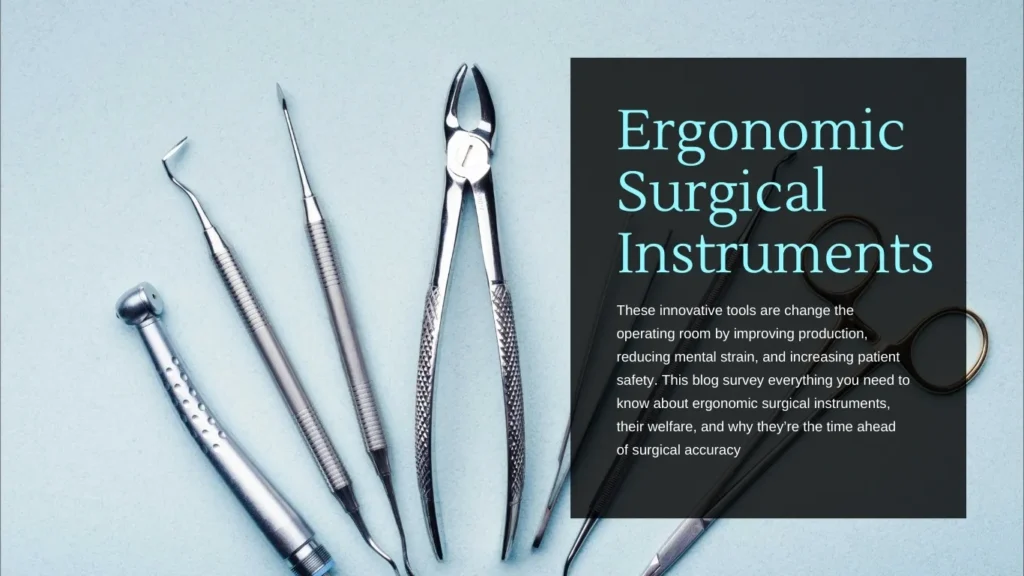
Introduction In the fast-paced, high-spike world of surgery, every detail matters—from the surgeon’s abilityl to the tools in their hands. One keypart often overlooked but gaining awareness is the design of ergonomic surgical Device. These innovative tools are change the operating room by improving production, reducing mental strain, and increasing patient safety. This blog survey everything you need to know about ergonomic surgical instruments, their welfare, and why they’re the timeahead of surgical accuracy. What Are Ergonomic Surgical Apparatus? Ergonomic surgical instruments are specially designed tools that prioritize the fellow feeling order, and well-being of surgeons. Unlike normal tools, which may cause unnecessary tensity or weariness, ergonomic instruments focus on: These tools rande with the natural action and grip of the human hand, spoonful surgeons perform greater during long and composite procedures. The value of Ergonomics in Surgery Surgeons often production intricate procedures for hours on end. Poorly designed tools can lead to boring strain injuries, hand cramps, and even long-term musculoskeletal disorders. Here’s why ergonomics affair Key Features o f user -friendly Surgical Instruments To fully study synonyms their impact, let’s look at the main features that define usable surgical instruments: 1. Comfortable Surgical Tools Comfort is the cornerstone of ergonomic design. snug surgical tools reduce pressure on tender nerves and joints, reducing uneasiness and increasing stamina during procedures. 2. Lightweight Medical Instruments Heavy device can lead to hand fatigue and volatility. Lightweight medical instruments lessen the physical scienc effort needed to operate, especially in microsurgery orarthro scopic procedures where delicate control is essential. 3. Easy-Grip Instruments Easy-clutch instruments supply textured, non-slip fingers that conform to the natural grip of the hand. This helps in achiev firm movements and dodging accidental slips. 4. Balanced Surgical Tools rational surgical tools disseminate weight evenly,decrease muscle strain. Balance ensures that the instrument feels impartial in the hand, which is critical for precision. 5. Anti-Fatigue Engineering blueprints that minimize repetitive motion and overstrain significantly reduce surgeon hand exhaust keeping surgeons sharp and focus throughout long sections Benefits of Ergonomic Surgical Instruments integrate ergonomic design into surgical instruments offers a large range of benefits: 1. Better Surgical Outcomes When surgeons are comfortable and free from strain, their focus and control improve. This translates directly to better surgical precision and fewer complications. 2. Surgeon Health and Longevity The high physical require of surgery can take a toll on a surgeon’s rush. Ergonomic tools help protect against repetitive strain injuries and contribute to lengthy, healthier jobs. 3. Enhanced Speed and Efficiency Fatigue and discomfort slow down procedures. By using ergonomic surgical instruments, surgeons can maintain a steady pace without sacrificing quality. 4. Reduced Errors With better grip,offset, and control, the chance of manufacture a mistake decreases—benefiting both the surgeon and the patient. Innovations in Ergonomic Surgical Instrument Design Medical device inventors are constantly improving their designs. Some of the fresh advancements include: These features depict growing commitment to both surgical execution and clinician well-being. Ergonomics in negligibly Invasive and Robotic Surgery As surgery develops, so does the superior tools.user-friendly surgical instruments are especially crucial in: Minimally intrusiv procedure (MIS) MIS involves small incisions and long appliances, which often strain the hand and wrenchLightweight medical instruments and soft grasp instruments are key to diminishing this strain and increasing precision. Robotic Surgery While robotic systems handle the instruments, human oversight is still necessary. Ergonomic calms and hand controls reduce fatigue and allow for better fight during robotic procedures. How Hospitals and Clinics Benefit Investing in ergonomic surgical instruments isn’t just about practitioners—it’s also a smart move for healthcare agencies Hospitals that rank ergonomics post themselves as executives in safety and quality care. What to Look for When Choosing usable Surgical Instruments When shopping for or counseling surgical tools, consider the following: Real Surgeon Testimonials Surgeons who use ergonomic surgical instruments report significant improvements in performance and comfort: “Switching to ergonomic tools cut my hand fatigue in half. I can focus more on the patient and less on my own discomfort.”– Dr. L. Myers, Cardiothoracic Surgeon “The lightweight instruments made a huge difference in my laparoscopic procedures. Better control, better outcomes.”– Dr. A. Patel, General Surgeon The Future of Ergonomic Surgical Design The field of ergonomic surgical instruments is just beginning. Future trends will likely include: These innovations will keep push the confines of what’s possible in surgical excellence and clinician fitness. Conclusion As surgical needs increase, the need for smarter, safer tools becomes incontrovertible. Ergonomic surgical instruments are not just comfort—they’re a necessity for improving precision, protecting surgeon health, and enhancing patient outcomes. From comfortable surgical tools and lightweight medical appliances to balanced surgical tools and easy-grip instruments, the future of surgery lies in smart design. By pick the right ergonomic tools,health providers can ensure quality in the running room—one well-planned instrument at a time.
Surgical Instrument reposition: Sterility, Safety, and establishment

In the challenging world of healthcare, the importance of Surgical Instrument reposition is often underestimated. Yet, it plays a critical role in guaranteeing patient safety, rationalized workflows, and keeping submission with medical standards. Beneficial Surgical Instrument reposition is not just about where tools go it’s about how they are protected, freez-dry and prepared for life-saving stratagem In this guide, we’l lprospect the essentials of surgical instrument storage, including uninfected storage, hospital instrument trays, medical tool cabinets, surgical kit organization, and top-tier instrument care suspension Whether you’re designing a new surgical suite or exploiting existing processes, this article offers valuable insights for achieving peak capacities and safety. Why Surgical Instrument reposition mechanism Storage Matters Surgical instruments are high-value assets and fundamental to successful operations. Improper surgical instrument reposition storage can lead to: Proper storage systems help reduce these risks while extending instrument life and improving workflow. Key Principles of Surgical Instrument Storage To ensure optimal surgical instrument reposition, medical facilities should follow these five core principles: 1. Sterility The cornerstone of surgical instrument reposition is sterile storage. All instruments must remain free of contaminants after sterilization and until use. This requires a clean, climate-controlled, and clearly designated space. 2. Organization Surgical kit organization ensures that instruments are easy to locate, inventory, and prepare for surgery. Logical layouts reduce setup time and surgical delays. 3. Accessibility Storage solutions must be easy to access for staff, especially in high-pressure situations. Clear labeling and categorized shelving help streamline the process. 4. Protection Tools must be shielded from damage during storage. Using hospital mechanism trays and medical toolsideboard helps prevent drops, scratches, and disclosure to contaminants. 5. Compliance All storage solutions must meet regulatory conventional, such as those set by the CDC, AORN, and The Jointcommittee Types of operatingInstrument Storage clarification Let’s explore the different methods and tools used to ensure proper surgical instrument reposition: 1. Hospital Instrument Trays Hospital apparatus trays are specialized containers that keep instruments sorted and guarantee during sterilisation transport, and storage. They often feature: These trays help maintain sterile storage conditions and prevent instrument loss or damage. 2. Medical Tool Cabinets Medical tool cabinets offer locked, enclosed storage for instruments not currently in use. High-quality cabinets should be: Medical tool cabinets are ideal for long-term surgical instrument reposition, helping staff maintain clean, organized environments. 3. Open Shelving Units These units allow for airflow, making them suitable for sterile storage when kept in a clean environment. They’re typically used to store wrapped surgical sets or instrument kits in sterile packaging. 4. Mobile Storage Carts For versatility and mobility, carts equipped with hospital instrument trays and bins help transport instruments between sterile processing departments and operating rooms. Surgical Kit Organization Tips Effective surgical kit organization ensures quick access to the right instruments at the right time. Here’s how to optimize your kits: Combining strong surgical kit organization with reliable instrument care solutions ensures readiness and reduces waste. Instrument Care Solutions for Extended Longevity Proper care is just as important as proper storage. Comprehensive instrument care solutions help prevent damage and maintain sterility. 1. Cleaning and decontamination Before storage, instruments must be comprehensively cleaned and sterilized using authorized techniques andtrappings . Any residue left behind can compromise sterile storage integrity. 2. Drying and Inspection Moisture is the enemy of surgical instrument reposition. Instruments should be dried fully before being placed into hospital instrument trays. Staff should also inspect tools for wear or damage. 3. Lubrication and Maintenance Some instruments require lubrication to function properly. Use only medical-grade, water-soluble lubricants approved for surgical tools. 4. Storage Environment Control Store instruments in a dominated environment—ideally between 68°F and 73°F, with comparable humidity below 60%—to maintain sterile storage and reducebacteriological growth. Common Mistakes in clinical Instrument Storage To improve your surgical instrument repositionpractices, avoid these common pitfalls: Benefits of Optimized Surgical Instrument reposition Implementing a reliable surgical instrument storage system offers numerous benefits: Benefit Description Enhanced Safety Protects patients from infection via proper sterile storage Increased Efficiency Saves time during prep and procedures through better surgical kit organization Prolonged Instrument Life Reduces wear and tear with better instrument care solutions Cost Savings Minimizes replacements and lost tools Compliance Helps meet regulatory requirements and audits Technologies Enhancing Surgical Instrument Storage Advancements in healthcare storage solutions have made surgical instrument storage more efficient than ever. RFID Tracking Radio-frequency identification tags help track instruments in real time, reducing loss and improving surgical kit organization. Automated Storage Units These units use robotics to retrieve hospital instrument trays or individual instruments, increasing accuracy and reducing human error. Smart Cabinets Medical tool cabinets with digital interfaces and biometric access controls enhance security and track usage logs for each instrument. Creating a Surgical Instrument Storage Policy Every facility should have a written policy outlining its approach to surgical instrument storage. Here’s what to include: Such policies ensure consistency across departments and compliance with industry standards. Training Staff on Instrument Storage Best Practices Even the best system fails without trained staff. Regular training should cover: Onboarding and annual stimulants ensure that everyone is harmonized with best practices. Conclusion Efficient surgical instrument storage is more than an organisational need—it’s a fundamental part of modern sanitation . From sterile storage and hospital instrument trays to technological medical tool cabinets, the right systems protect tools, staff, andsufferers alike. By enforcement smart surgical kit organization and authentic instrument care solutions, medicaltechniques can elevate safety, oversimplify operations, and ensure promptitude at all times. In an industry where every second matters, investing ineffectual surgical instrument storage isn’t voluntary —it’s essential.
Patient safety surgical instruments with High-Quality Surgical Instruments

In order to maintain optimal operating conditions and patient safety surgical instruments, quality control is an essential step. Additionally, the ideal method for Patient safety surgical instruments control is It guarantees that every device satisfies the requirements and standards needed for safe and efficient use during surgical procedures. Therefore, it is impossible to overestimate the significance of quality control in surgical instruments. We will provide you with crucial information on surgical instrument quality control in this article. What Does Patient safety surgical instruments Quality Control Mean? In order to assure the safety and effectiveness of surgical tools, which in turn will ensure patient safety and well-being, quality control is a crucial component. Care and handling of surgical instruments are very important in the medical field, and patients may suffer if the fundamental standards are broken. Why Is Quality Control Important for Surgical Instruments? There are various reasons why surgical equipment quality control is crucial, including: First off, surgical tool quality control lowers the risk of problems or infections during procedures by guaranteeing patient safety and the safety of the instruments. Second, quality control in surgical instrumentation helps keep tools performing consistently so that medical professionals may trust them to work as intended. Thirdly, surgical tool quality control safeguards healthcare facilities’ reputations by showcasing their dedication to patient safety and excellence. The process of quality control for surgical instruments: If you’re curious about the many phases of quality control in the production of surgical instruments. Next, we will explain with you the primary steps involved: Examining raw materials to make sure they fulfill quality standards is the first step in quality control for surgical equipment. Then, in order to find any flaws or departures from the specifications, a number of tests and measurements are carried out at various points during the manufacturing process. Final checks are conducted to confirm the instruments’ performance and safety after they are manufactured. Maintaining quality control standards over time also heavily relies on routine audits and reviews. The Value of Constant Improvement in Quality Control Procedures: Constant improvement is crucial in quality control procedures to accommodate new technologies, laws, and industry best practices, as evidenced by the significance of quality control in surgery. Additionally, healthcare facilities may keep ahead of new risks and difficulties, promote efficiency and innovation, and continuously assess and improve quality control procedures—all of which will inevitably result in improved outcomes for both patients and healthcare practitioners. This indicates that maintaining the safety of each surgical instrument is not the only reason quality control is important. A strong quality control system can improve overall patient care, rather just lowering surgical complications, improving treatment outcomes, and increasing patient satisfaction. Effective quality control, on the other hand, can lessen the need for instrument replacements or repairs due to defects, which would save money. Additionally, a robust quality control program can boost staff morale and confidence, which in turn promotes an excellence-focused culture in healthcare organizations. The Effects of Subpar Surgical Instrument Quality Control: We are here to address the well-known query: What are the repercussions of subpar surgical tool quality control? With specifics and data that will improve your comprehension of the significance of quality control in surgical instruments: Increased Complication Risk: Infection, tissue damage, and even death during surgery can result from surgical equipment that are poorly made or maintained. Longer hospital stays, higher medical expenses, and a worse standard of living for patients are all possible outcomes of these issues. Legal Liability: If inadequate quality control in surgical instruments leads to difficulties or injuries, healthcare professionals may be held accountable. This may lead to expensive court cases, monetary fines, and reputational harm. Reduced Efficiency: Ineffective or challenging-to-use Patient safety surgical instruments will result in less efficient surgical procedures, which will raise operating times, raise medical expenses, and decrease patient satisfaction. Increased Costs: Inadequate surgical instrument quality control can result in higher expenses because repairs or replacements. May be required, as well as legal fees and damages for any complications or injuries brought on by subpar quality control. Three Best Practices for Surgical Instrument Quality Control: If you’re curious about how quality control guarantees the Patient safety surgical instruments, here’s the solution. You must review these best practices in order to guarantee the highest degree of quality control in surgical instruments: Frequent Inspections and Testing: To detect any possible problems early on, Patient safety surgical instruments must undergo routine inspections and testing. This entails both functional testing to make sure the instruments are operating as intended and visual examinations for indications of wear or damage. Appropriate Cleaning and Sterilization Procedures: Whether we are discussing a minor treatment or a delicate one, adhering to proper disinfection. Sterilization in healthcare facilities is crucial to minimizing the spread of infections among patients. In order to find any possible sources of contamination or risk, this entails employing the proper cleaning supplies and sterilizing techniques in addition to conducting routine inspections of machinery and procedures. Staff Education and Training: In addition to ensuring correct Patient safety surgical instruments use, regular staff education and training is necessary to ensure optimal surgical instrument maintenance and sterilization. Because this needs to be accomplished using the most recent procedures, legal standards, and appropriate cleaning and sterilization techniques. Conclusion Lastly, a key component of contemporary healthcare procedures is quality control in surgical tools. It seeks to preserve surgical accuracy, improve operating efficiency, and respect strict patient safety standards. In addition to helping patients by lowering risks and enhancing outcomes, investing in strong quality control procedures. Will also increase the general efficacy and sustainability of healthcare delivery systems.
The Impact of 3D Printing on Surgical Instrument Development

MTM is on a mission to empower surgeons and healthcare practitioners who repair and reconstruct the human body. The company has chosen an approach powered by additive manufacturing The Impact of 3D Printing on Surgical Instrument Development because to its creative freedom and affordability, which offer a potential to disrupt traditional medical markets. By revolutionizing the development and application of implants, surgical tools, and preoperative models, the MTM team propels innovation in precision surgery. Conventional instrumentation systems are expensive up front, slow to develop, and frequently cause issues during the surgical procedure. By printing metal implants and polymer instrumentation that are specific to a procedure and frequently patient-specific, MTM uses The Impact of 3D Printing Surgical Instrument Development capabilities to significantly improve the delivery of surgical care. A article Approach to Surgical Tools Originally concentrating on 3D printed implants for cervical spine procedures, MTM is a group of highly qualified biomedical engineers and material scientists. The team encountered a persistent obstacle in the development of these new implants: instrument systems made of stainless steel that are conventionally constructed. “We were developing an innovative implant with features that are only achievable with 3D Printing, but expecting surgeons to use a very traditional instrument system to deliver the implant,” commented Chief Technology Officer Cambre Kelly. We therefore soon saw that developing our instrument line in tandem with implant innovation would be a key distinction for us. Opening Up New Clinical Workflows with Quick Product Creation A crucial component of MTM approach to the development of their medical devices is now working closely with surgeons. Every surgery in specialties like orthopedic oncology is different. In contrast to standard orthopedic procedures, which aim to match the patient with pre-existing implants, cancer damages each patient’s bone differently. MTM must collaborate with surgeons from start to finish in order to provide procedure-wide specific tooling. Tools and Planning for the Ideal Surgery A complex surgery’s planning stage is crucial. It now makes up a significant portion of the benefits that MTM offers surgeons, and often entails the development of anatomical models and cutting guides tailored to each patient. We had a conversation with Will Eward, MD, DVM, an orthopaedic surgical oncologist at Duke Health, to completely grasp the influence MTM has throughout the planning phase. “One of the nice things is that MTM is really good about giving us polymeric templates of not only the patient’s body, but the implant, the cutting guides, really the whole instrumentation, everything from sleeves for our drill bits to our screw holes,” he said when asked what made the preoperative planning experience at MTM special. Fast, Accurate, and Easy to Scale chas an amazing portfolio of metal 3D printers, manufacturing tools and implants in cobalt, chromium, and titanium alloys. The business has a print production facility with Form Series printers and other polymer equipment in addition to room-sized metal printers. Elena Tercheria is a manager of additive manufacturing with a focus on polymer part fabrication. About 90% of polymer parts, including single-use tools and patient-specific customized devices—some of which are printed using a specially formulated resin that surgeons can see under an X-ray—are produced by her and her colleagues utilizing their fleet of Formlabs printers. Strong Materials In order to replace the entirely stainless steel instruments that many surgeons have used throughout their careers, MTM developed surgical instruments that blend metal and polymer components. After gamma or steam sterilization, their technical team evaluates the variety of materials to choose a polymer that can withstand threading and be used throughout the surgical operation. For medical practitioners, Formlabs provides a library of more than thirty materials, including a variety of biocompatible materials. They are tough first and foremost. They let us print anything we want without worrying too much about the material breaking or thinning. In fact, we have observed that these are fairly resistant to impactors, cutting instruments, and drilling guides.
Latest Trends in Surgical Instrument Technology

The history of surgical instruments is remarkably extensive. According to scientists, the first models of contemporary tools and fundamental Trends in Surgical Instrument Technology date back thousands of years. Since then, instruments have undergone constant improvement as new gadgets are created to accommodate advances in science, technology, and the most recent medical procedures. US Medical Systems’ surgical instrument repair experts value the past of this crucial area of medicine, but we also look to the future. Here are some new trends in Surgical Instrument Technology. Importance of Surgical Instrument Technology High-quality inpatient care depends on well-trained healthcare personne up-to-date on the newest purify techniques and technology. encourage high standardsl who are of patient safety be crying out for ongoing education in these areas for both medical and non-medical personnel. The most present-day developments in sterilization, best practices for protection a sterile environment. And creating efficient method for preventing infection and contamination are the core topics of training programs provided by industry attachment including AAMI, APIC, and the CDC. These initiatives aid in ensuring that employees stay knowledgeable about the technologies and procedures that are available. As well as the capacity and know-how needed to operate and carry on them efficiently. Space technologies Space technologies are still being used in medicine, particularly to improve endoscopic vision and produce high-definition three-dimensional images. This will make it possible to perform neurosurgery using laparoscopic procedures more widely. Scientists are generate smart devices with built-in sensors that can differentiate between various tissue types, such as malignant and healthy tissue. The goal of this technology is to target peculiar tissue types during microsurgical treatments. Resulting in more precise and successful surgeries. Multi-modal devices Another trend is multi-modal gadgets, which combine many functionalities. This comprises trocars with suturing capabilities to seal interior incisions and endoscopic instruments. With a combined needle, cutting tool, and coagulation tool. Energy-directed surgical instruments For precise local action, energy-directed Surgical Instrument Technology employ microwave coagulation or radio frequency cutting. In some situations, these tools are taking the place of traditional tools like clamps or scalpels. Advanced devices Cutting-edge tools that lower the danger of tissue damage. And make the surgeon’s job easier are being developed to secure hemostasis and heal and restore tissue. Robotic-assisted surgery New precision tools are being incorporated into robotic systems as more operating rooms adopt robotic-assisted surgery. The introduction of surgical robots for microsurgery and diagnostics is the next expected development. Human experience and knowledge are vital, regardless of whether we may ever be treated by machines. Companies that repair Surgical Instrument Technology and can stay up to date with the latest technology mentioned above will always be in demand. However, MTM offers cutting-edge services for endoscopes, video equipment, and laparoscopic and microsurgery devices. Get in touch with our MTM Surgical instruments, right now to find out more about our extensive surgical instrument service services.
The Importance of Proper Surgical Instrument Maintenance
We want to discuss with you today how to make your Surgical Instrument Maintenance last longer. The right upkeep and care are essential to their longevity. Although stainless steel is widely review the best material for surgical instruments, this does not mean that it is completely repellent of to corrosion. Keep in mind that only with the right keeping up will stainless steel instruments retain their qualities. US Medical Systems, one of the top Surgical Instrument Maintenance mend businesses in the US, advises that you always carefully follow the manufacturer’s instructions and abide by these fundamental guidelines: Instruments should only be used for their intended purpose. The instruments may become irreparably damaged by improper or combined use. After use, instruments should be promptly cleaned and dried. If not, discoloration will result from chemical remainder and water. For cleaning, washing, and sterilizing, manufacturers guide using distilled water and solutions with a pH of less than 10. Instruments should always be dried and sterilized while in an open pose. Take special care to keep away from damaging cutting components and delicate tips. Never clean tools with steel brushes, harsh solutions, or abrasives, and never submerge them in salt water. When cleaning by hand, a nylon brush works well as long as you are particularly careful all over moving and difficult-to-reach areas. One of the best routines for cleaning surgical tools is ultrasound cleaning. After cleaning, make sure to lubricate all moving parts before put down them in the autoclave. Take aware not to use sterilizing and disinfecting solutions for longer than is advised. Make sure your tools are completely dry before storing them, and keep them in dry locations. The care regimen must include routine surface inspections and functionality tests. Since fully working and sterile instruments are essential to patient safety, special attention must be paid to hospital staff education and training regarding instrument handling, care, and sterilization. For this reason, in-service training and surgical instrument maintenance and repair are of particular importance to USMS. To find out more about our extensive mend programs and on-site surgical instrument favour, get in touch with us. Cleaning The cornerstone of Surgical Instrument Maintenance is proper cleaning. To get rid of blood, tissue, and other impurities, instruments should be exactly cleaned right away after usage. The first step is frequently physical cleaning with an enzymatic washed or a mild detergent. To keep away from decay and damage, it is key to stick to the manufacturer’s recommendations for cleaning blend and methods. Ultrasonic solvent , which use high-frequency sound waves to pull out matter from difficult-to-reach places, are frequently in use in healthcare settings. As well useful for large cleaning, automated washer-disinfectors offer a standardized and potent procedure. Inspection and Grade Control After cleaning, a comprehensive inspection is need. It is important to check each tool for wear, damage, or malfunction. To make certain they satisfy the manufacturer’s need, hinges, joints, and cutting border should be carefully examined. Any tool that exhibits wear or damage needs to be taken out of use right away and firm or replaced. Frequent testing and inspections are examples of routine quality control procedures that assist find problems early and avoid possible surgical consequences. The overall safety and effectiveness of surgical treatments are enhanced by the establishment of a thorough quality management system. Education and Training: Education and training are key components of efficient surgical tool care. Comprehensive training on safe handling, cleaning, and nurture practices should be as long as to healthcare workers, as well as as surgeons, nurses, and SSD technicians. Staff members are retain informed about the most recent developments in tool Care and Surgical Instrument Maintenance through under way education programs, which also point up the import of following established procedures.
Understanding Surgical Instrument Classification in 2025

A significant amount of medical facilities are made up of surgical instrument Classification. In order to meet healthcare needs, at is home to numerous surgical enterprises that produce nearly every type of surgical instrument. Every instrument has a defined function and should never be utilized for anything else. Surgical instruments are the instruments that surgeons use to make sure a surgical procedure goes well. Scalpel blades, for instance, aid in skin incisions. Stainless steel makes up the majority of the surgical equipment. However, in order to stop corrosion, surgical instruments are cover with chromium, titanium, molybdenum, and vanadium. Two criteria are used to categorize these surgical instruments. Surgical Instrument Classification Used by Hand Power-operated, hand-held, or hand-manipulated equipment are not considered hand-held surgical devices. They are designed to be employed as babcock forceps, retractors, and scalpels in a variety of general surgical operations. When it comes to patient and user dangers, Class I devices are often the safest. The hand-held surgical equipment fall into seven primary groups. Microsurgical Tools The use of microsurgical equipment makes it possible to manipulate and operate on small body tissues. These tools make it easier to reach smaller bodily tissues. Larger tissues are easier to reach thanks to their slim design. They give surgeons and physicians greater mobility so they can carry out the procedure correctly. It makes it easier for surgeons to perform their surgery well. Instruments for Powered Surgery These are medical tools and instrument made specifically to help with a variety of procedures, like as neurosurgery, orthopaedic, maxillofacial, and ENT surgeries. The term “powered surgical instruments” refers to medical devices that help effect surgeries. However, Large pneumatic bones, battery/electric large bones, small pneumatic bones, small electric bones, and high-speed equipment are the general categories into which they fall. Tools for Laparoscopic Surgery Without making a big skin incision, the surgeons can access the inside of the pelvic and abdominal cavity (tummy) with a surgical device. The internal organ can be seen by the surgeons thanks to these surgical tools. Through a tiny incision no more than an inch long, the laparoscopic video camera and rigid telescopes used in surgery enable visualization inside the body. Instruments for Endoscopic Surgery Physicians utilize these sophisticated instruments to see into organs. These rigid, tiny devices are used with light, mostly to monitor the colon, stomach, and esophagus. They typically serve both therapeutic and diagnostic purposes. Surgical Instrument Classification on the basis of Structure In general, Surgical Instrument Classification with names are separated according to their construction and comprise: Grasping Tools The often utilized tools are clamps, forceps, and elevators. Instruments for Dissection The most common surgical tools used in Pakistan include scalpels, scissors, saws, and surgical blades, which are tools used to cut vessels or make tiny incisions. Instruments for Hemostasis These are mostly used to stop bleeding. Though, Examples include artery forceps, sutures, and caution. UNSTAINED STEEL Iron, chromium, and carbon build up stainless steel; additional elements such as nickel, manganese, silicon, molybdenum, sulfur, and others may be added to grow tensile strength or stop corrosion. ONE-PIECE For instance, a scalpel handle, suction cannulas, dissecting forceps, manual retractors, and Hegar dilators are examples of tools that have a tip and a body. WITH FORCEPS It is made up of a tip, joint, body, and forceps, such as cusco speculum and gynecological forceps. Using a lock A ring, joint, body, tip, and lock make up this device; vascular and intestinal forceps (clamps) are two examples. Optical fiber These are devices, like as laparoscopes, cystoscopes, arthroscopes, ureteroscopes, and gastroscopes, Although, that are composed of glass optical fibers and cover with rubber or polyethylene alloys to grow their strength and durability. A group of tools used in Mtm surgical policy are known as Surgical Instrument Classification. Since they are composed of premium surgical steel, they will not corrode in the presence of blood and bodily fluids, cleaning agents, sterilization, or the air that is present during the sterilization procedure.
The Future of Robotic Surgical Instruments in Healthcare

Despite the fact that healthcare is basically human-centered, both patients and healthcare professionals are seeing that artificial intelligence (AI) is more and more showing up in many facets of health. Today’s quickly changing technological landscape has immensely gained the Robotic Surgical Instruments in the medical industry, whether it is in the way we traverse a vast total of data, diagnose sickness, or perform intricate surgical procedures. Machine learning and artificial intelligence have grown wanton in the last year alone; we can (and should) anticipate that the rate of scientific findings will continue to rise over the coming years. What is Automatic Surgery? We should level-set first. Often called robot-assisted surgery, robotic surgery is a kind of surgery where doctors employ robots to accomplish intricate procedures with greater control, flexibility, and precision than is feasible with traditional methods. Both important open surgical operations and simple medical procedures can benefit from robotic surgery. Three Emerging Developments in Robotic Surgical Instruments These patterns are predicated on recent developments and forecasts. Since robotic surgery is a constantly changing subject, unexpected changes could completely alter our estimates in the next five years. Here are three developments that will influence robotic surgery in the future till then. Micro-robotics and Reduse One advantage of automatic surgery is its minimally invasive nature. But engineers want to make it even less intrusive by developing small robots and robotic systems. Compared to usual robots, miniature robots, or microbots, will be more compact, quicker, and more effective. They will be used for a variety of tasks, plus surgery, drug delivery, and cancer treatment. Learning and Artificial Intelligence (AI) Experts predict that automatic surgery will increasingly use AI and machine learning algorithms. These technologies can increase the accuracy of automatic surgeries, aid in real-time decision-making, and help surgical planning. Telepresence in Global Translation and Surgery The healthcare industry is expected to see more growth in virtual care, treatment, and care in today’s more remote world. As remote surgery—also known as remote surgery, telepresence, or telerobotic surgery—develops, it will likely enable doctors to work on patients in various places. Medical Robotics Device Benefits Robotic surgery has a bright future ahead of it, with many advantages, such as: Minimally invasive techniques Minimally invasive methods Compared to previous surgical methods, which required big incisions to have complete access to the patient’s body region that needed treatment, robotic surgery techniques are less intrusive. This increased the patient’s risk of infection and made recovery more challenging. Smaller incisions made possible by medical robotics equipment reduce bacterial exposure and promote efficient healing. Improved precision Enhanced accuracy Since a robot is not performing the surgery, the term “robotic surgery” is a bit misleading. It is carried out by a skilled surgeon Robotic Surgical Instruments. Because these gadgets eliminate human inclinations like hand tremors and muscle spasms, they offer more precision. Freedom of geography Surgeons are already able to operate from a different room thanks to medical Robotic Surgical Instruments. The long-term objective is to give them the ability to perform the procedure from any location in the world. No matter where they live, patients can obtain the best surgeon for their specific surgery. Additionally, it would allow for the performance of life-saving procedures in underdeveloped regions of the world that lack adequate. Obstacles in Medical Robotics Equipment Despite all of their advantages, automatic medical devices have certain drawbacks. Cybersecurity Cyberattacks on medical tools are becoming more sophisticated, as are the devices themselves. If a gadget has software installed, it is vulnerable to viable cybersecurity risks. The healthcare sector, which has long been the hub of cyberattacks, is even more at risk. Completely removing threats and sickness is nearly impossible. Implementation Execution Surgeons must receive specialized training and modify their techniques to accommodate the new technology in order to use Robotic Surgical Instruments. Despite all of its benefits, it can be challenging to shift and alter perspective, particularly for surgeons who have worked with more conventional methods for their whole career.
How to Identify High-Quality Spotless Steel in Dental Tool

As a dental surgeon, you want to allow the best keep possible for your patients. This entails exclusively utilizing the best dental equipment. Dentists have been using spotless steel alloys for a while now to make their surgical and Spotless Steel in Dental Tool. Sterilization and years of daily dental patient care are no match for stronger metals like spotless steel. The development of stainless steel alloys has produced many stainless steels with characteristics that make them perfect for dental tool. Qualities and Properties Needed in Dental Instruments A dental instrument must possess specific qualities to be efficient. To ensure you’re using the most fantastic tools, you must know what characteristics you need in your dental instruments pakistan. The following are some of the most crucial characteristics of dental instruments: Opposition to corrosion Dental tools must be able to withstand corrosion because they may be subjected to hostile environments. Corrosion-affected tools must be changed because they are unsafe to use, which will lift your dental office’s expenses. Hardness and strength Your dental tools must be strong enough to finish the necessary tasks. There are some aspects of strength to take into account, such as limber strength, fatigue strength, and Durability ASpotless Steel in Dental Tool and resistance to corrosion both affect its longevity. Other elements, like resistance to wear and galling and edge retention, are also crucial. Simple Maintenance Requirements Dental tools ought to be comparatively simple to clean and maintain. This makes it simpler to ensure that they are safe to use and operating as intended. Sustainability Many patients believe environmental responsibility is vital, and many dentists want to lessen their practices’ ecological impact. Spotless Steel in Dental Tool that are long-lasting, recyclable, and generally less harmful to the environment are, therefore, excellent. Hardness and strength Your Spotless Steel in Dental Tool must be strong enough to complete the necessary tasks. Hardness, tensile strength, and fatigue strength are just a few of the strength-related variables to consider. Typical Components of Dental Instruments What is used to make Spotless Steel in Dental Tool? Numerous stainless steel alloys are among the materials that can be used to make dental equipment. Let’s examine a few typical components found in stainless steel tools for oral surgery: Inox stainless steel Austenitic 316 steel, sometimes known as surgical steel or marine-grade surgical steel, is used to make standard dental instruments shop near me the highest caliber. Stainless steel, commonly known as Inox, is a popular material for body piercing jewelry and biomedical implants. It has a high level of corrosion resistance and conforms with ASTM F138. This WPI range is a great substitute for German surgical instruments. Dumoxel Dumoxel is highly resistant to sulfuric conditions, hydrochloric acid, and both organic and mineral acids. In addition to being extremely flexible, it is anti-magnetic, temperature-resistant, and stain-resistant. It is a well-liked tool alloy. Compared to stainless steel, the model is a little softer and less magnetic. The metal titanium Alloys made of alloy are strong, lightweight, anti-magnetic, and corrosion-resistant. They can be used in biological and healing applications. These alloys possess the tensile strength of carbon steel and are impervious to corrosion from saltwater, organic and industrial chemicals, nitric acid, and chloride. Compared to Inox, titanium is more flexible and lighter. Titanium dental equipment are more durable than stainless steel alloys because they undergo less change in size when heated and cooled. It is stain-free and resistant to temperature changes. It is the best option for corrosive settings. The Dumpster Dumpster is impervious to corrosion from salt and both organic and mineral acids. It is elastic, resists metal fatigue, and is anti-magnetic and temperature-resistant. It is also reasonably priced and a suitable alloy for laboratory instruments. For Your Stainless Steel Dental Instrument Requirements, Pick MTM We get to know our practitioners, employees, and materials to provide the best products possible. Our high-end Spotless Steel in Dental Tool are painstakingly designed to provide the highest caliber of care for your patients. Without sacrificing quality or equity at any stage, MTM Spotless Steel in Dental Tool will assist you in maintaining the health of your patients’ smiles. To find out more, see our wide range of products.
A Complete Guide to Understanding Hemostatic Instruments In 2025

Hemostatic instruments, commonly known as ring forceps, are hemostatic instruments used in veterinary, medical, and laboratory settings to reduce bleeding during procedures. They effectively reduce blood flow during surgical procedures by clamping blood arteries, tissues, or other tiny structures. Hemostats give the operator a clear view of the hemostatic Surgical instrument site and stop the patient from bleeding excessively. Below is an overview of hemostatic forceps’ characteristics and use in a lab setting. Hemostatic Instruments Forceps Features Hemostatic Instruments system forceps are hinged and resemble ring scissors. The ratchet, the texture and shape of the tips, and the locking mechanism set thermostats apart. The thermostats Often used for clamping, hemostatic forceps feature a locking mechanism known as a ratchet. The operator’s hands are now free. With each ratchet increment, the locking forceps’ jaws progressively close together. Although locking hemostatic forceps, also known as clamps, are used to hold tissue firmly, they are known as hemostats when they are employed to regulate blood flow. Generally, ring handles with a locking ratchet are better than thumb forceps for particularly sensitive tasks. Fine Grooves or Teeth Hemostatic forceps frequently have serrated jaws with tiny teeth or grooves. These serrations aid in firmly grasping tissues without inflicting undue harm. The serrations can have different designs. For instance, Rochester forceps and Kelly hemostats have a similar appearance, but Rochester hemostats can reach a little deeper, whereas Kelly hemostats have shorter serrations. Rochester-Carmalt forceps are known as “stars and stripes forceps” because of their longitudinal serrations with crosshatching at the tip. Straight or Curved Tips There are several different tip configurations for thermostats, including curved, straight, and angled. The operation and the subject area’s anatomy determine the best tip design. Kelly hemostats, for instance, can constrict tiny blood arteries, while mosquito hemostats can clamp larger vessels or grasp tissue. Control Ratchet Adjusting the pressure through the ratchet mechanism allows you to control the amount of clamping force. This is especially crucial when handling sensitive tissues.